Category: Articles
-

by Lawrence B. Conyers
-
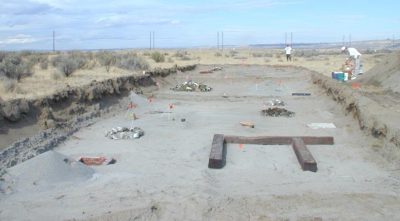
The HAMMER geophysical test bed in Richland, Washington provides a facility to compare ground-penetrating radar (GPR) reflection images to known archaeological features in the ground. Simulated buried features including stone cairns and rings, burials, trash middens, artifacts and other materials were buried at depths from 12-36 inches in sandy ground and then re-buried with the…
-
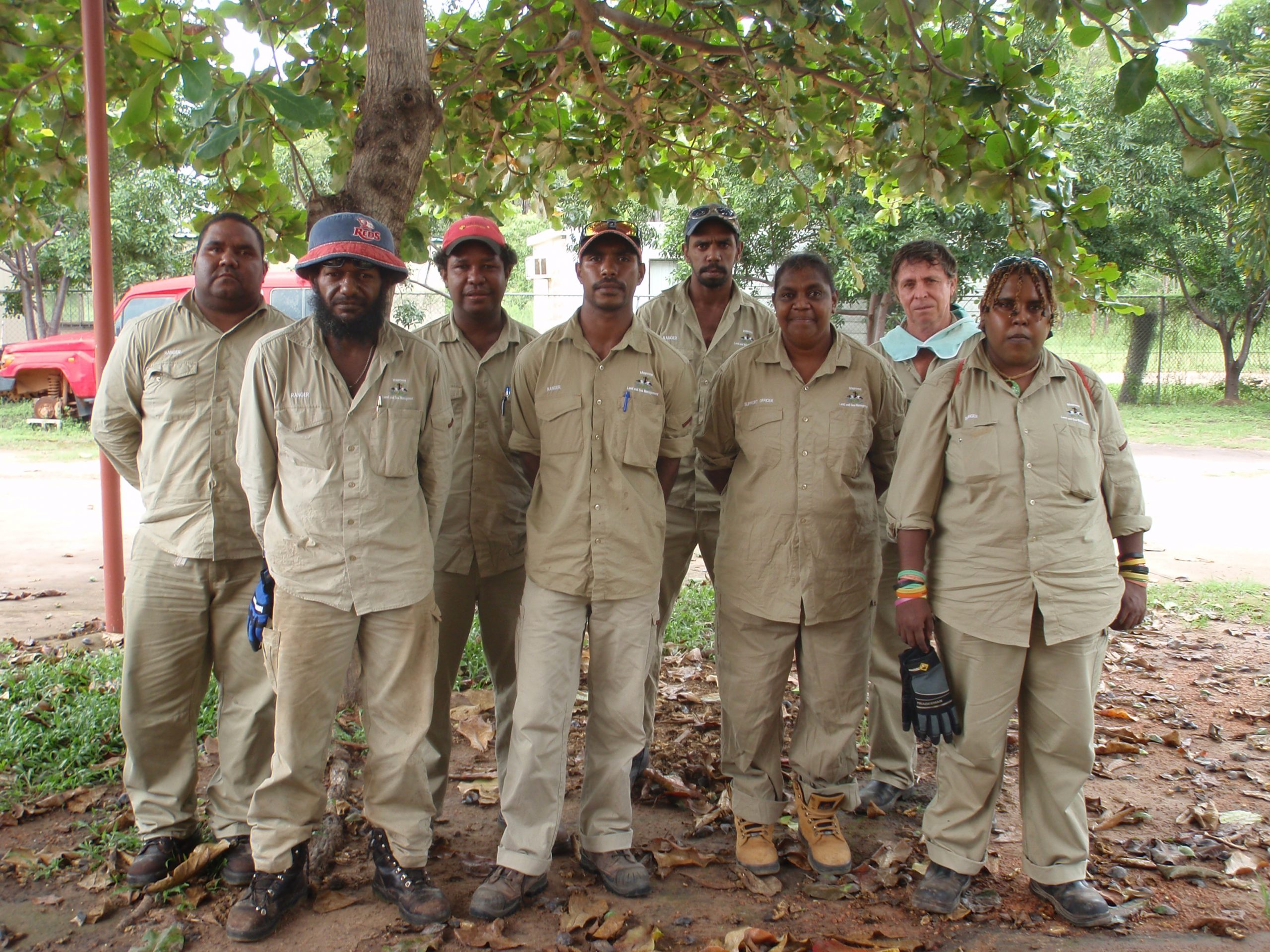
Ground-penetrating radar (GPR) and magnetic surveying of 17 earth mounds on the northern Cape York Peninsula show that prior to the construction of the mound areas were used as food processing or ritual activities that included organic matter and burning. Later, perhaps with increased population and cultural complexity, these areas were transformed into raised mounds,…
-
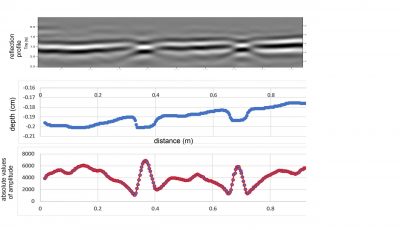
A footprint model was created in mud and covered in volcanic sand as a way to mimic conditions at the Laetoli, Tanzania site. Many antenna frequencies were tested with the buried prints uncovered, covered by plywood, and by a yoga mat. It was found that the yoga mat with the 2.6 GHz antennas produced the…
-
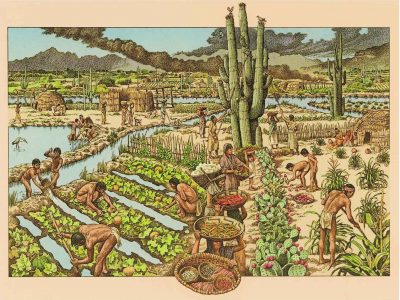
This report documents a project to apply geophysical prospecting techniques at known locations of prehistoric canals in the Gila River Reservation. The project goal was to test the ability of several geophysical prospecting techniques to image buried canals in the Gila River floodplain. Four geophysical prospecting approaches were tested: ground penetrating radar, seismic reflection imaging,…